

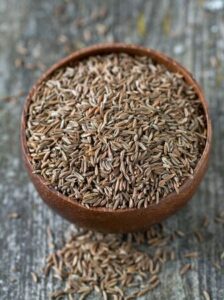
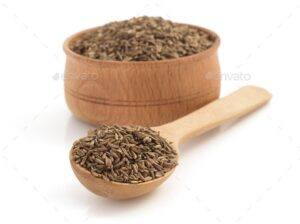
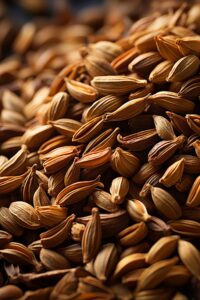
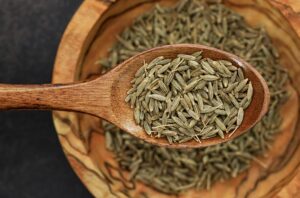
Cumin Seeds (Jeera)
Indian Cumin (Desi Jeera)
The most common type.
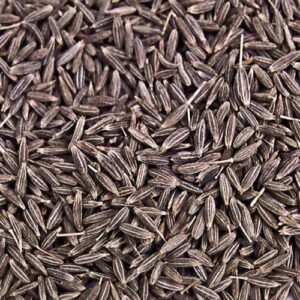
Light brown in color, elongated seeds.
Strong aroma and sharp flavor.
Grown mainly in Rajasthan and Gujarat (India produces over 70% of the world’s cumin).
Iranian Cumin (Shahi Jeera / Caraway)
Though not originally Indian, it is imported and sometimes cultivated in parts of India.
Smaller, darker seeds than normal cumin.
Sweeter and more delicate flavor.
Often used in Mughlai dishes, biryanis, and spice blends.
Black Cumin (Kalonji / Nigella sativa vs. Shahi Jeera confusion)
True Black Cumin (Bunium persicum) is also called Kala Jeera.
Thin, dark brown to black seeds.
More earthy, smoky taste.
Rare and more expensive.
Used in rich curries, kebabs, and Kashmiri cuisine.
Organic Cumin
Not a botanical type but a cultivation method.
Chemical-free farming, often exported for premium markets.
Bold & Regular Cumin (Market Grades)
Based on seed size and purity:
Bold Cumin – larger, plumper seeds.
Regular Cumin – smaller, thinner seeds.
🔹 Regional Specialties in India
Rajasthan Cumin – High oil content, strong aroma.
Gujarat Cumin – Lighter color, widely exported.
Madhya Pradesh Cumin – Increasingly cultivated, good for domestic use.